ATE LC30: damp walls and rising damp treatment
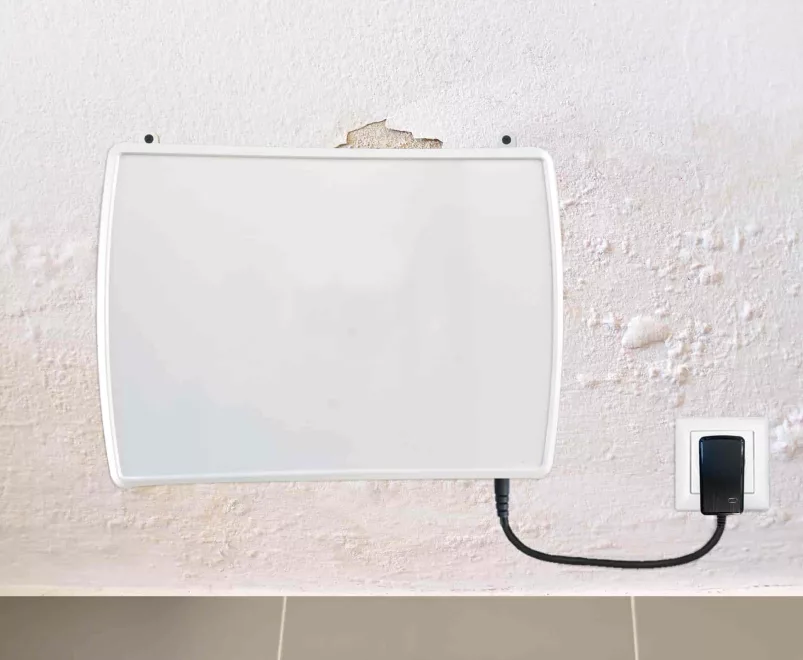
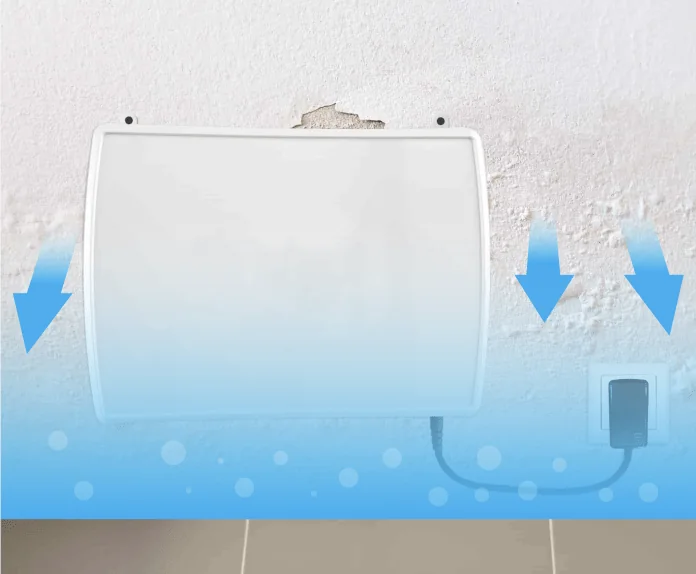
ATE LC30 is an electromagnetic device offered for walls affected by identified rising damp. A renovation project starts with understanding the source of moisture: plumbing leaks, penetrating damp and condensation require different measures. The masonry construction, affected areas and building layout help determine which solution to consider for the premises.
Choosing the coverage for your building
The manufacturer states a 30 m coverage diameter for ATE LC30, equivalent to a 15 m radius around the device. This is a distance, not a floor area in square metres. When comparing wall drying devices, plot the distances on the building plan and check the specifications of each model. The choice should reflect the actual layout rather than simply the number of rooms.
Preparing installation and selecting the product
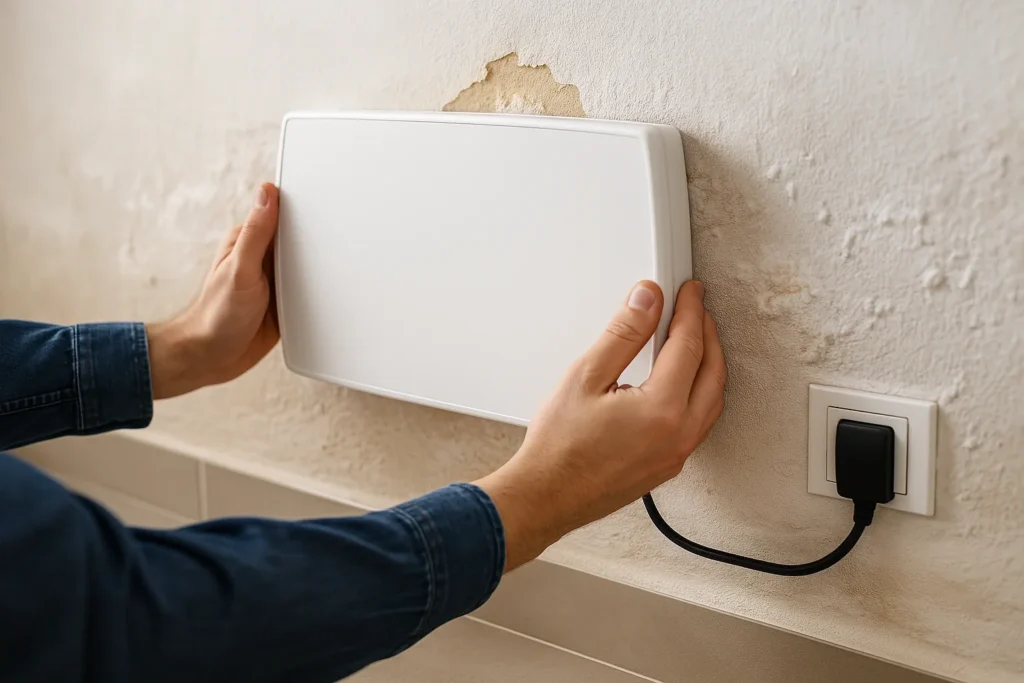
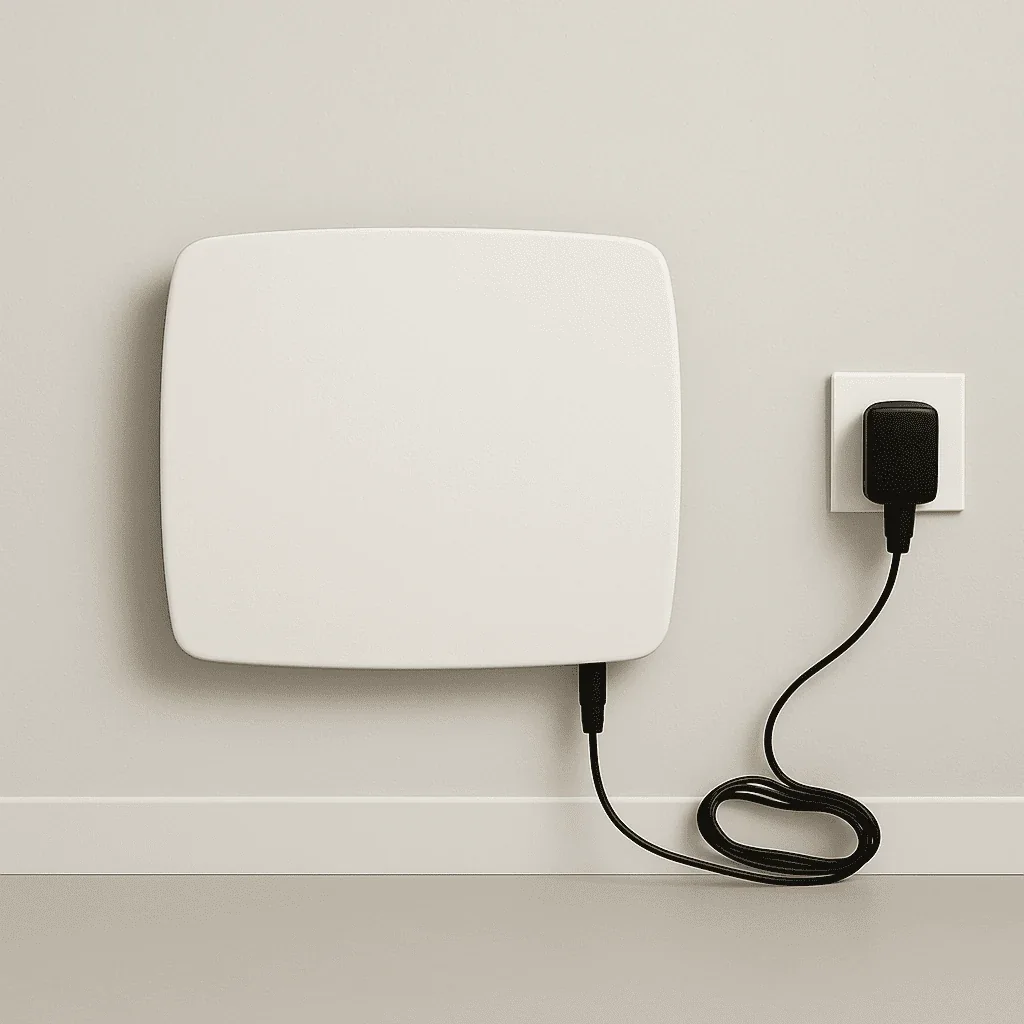
ATE uses the manufacturer-specified power supply and remains connected as instructed in the manual. Read the model-specific manual for positioning and mounting requirements. Prepare a suitable supporting surface and fixings appropriate for the masonry. The product page identifies the reference and finish, while the technical manual sets out the installation instructions. Both are useful when preparing a professional installation.
ATE LC30: practical steps for professionals
Prepare your proposal with these practical points, alongside the specifications and FAQ below.
Gather site information
Record the materials, floors and rooms involved. Add photographs and available information about the source of damp to describe your client’s situation clearly.
Plan an accessible location
Mark the affected walls, distances and access constraints on a plan. Check that the proposed location meets the model’s manual before arranging installation.
Organise installation
For this ATE, allow for two drilled holes for wall plugs and support screws, wall-appropriate fixings and the power supply specified in the manual. Check the substrate and clearances before work.
Make your proposal clear
State the reference, finish, supplied equipment and services you provide. Distinguish the device price, any installation service and planned finishing work.
Model manual · ATE LC30
English version · PDF
Frequently asked questions about ATE LC30
What type of damp is ATE LC30 intended for?
ATE LC30 is an electromagnetic device offered for walls affected by identified rising damp. It does not replace repairing a leak, addressing water ingress or resolving condensation.
What does the stated 30 m diameter mean?
The manufacturer states a coverage diameter of 30 m, equivalent to a 15 m radius around the device. This is not a floor area in square metres. Consider the distances to the affected walls and the layout of the building.
Does ATE LC30 need electricity?
Yes. ATE LC30 uses the power supply specified by the manufacturer and must remain powered as instructed in its manual.
How should I prepare to install ATE LC30?
Read the manual for ATE LC30 before installation. It explains the mounting surface, positioning and precautions. Use fixings suitable for the wall and follow the manufacturer’s instructions.
How does it differ from the other models?
ATE devices use mains power; ATG geomagnetic devices operate without electricity. Stated ATE coverage diameters are 15 m for LC15, 30 m for LC30 and LC30 PULSE, and 60 m for MAX. Compare the specifications and manual for each model.
Where can I find the ATE LC30 manual and specifications?
The English manual for ATE LC30 is linked below. Also check the product reference and finish on the shop page before ordering.