Estérençuby Church: reading the GEOSTOP 60 follow-up report
November 18, 2026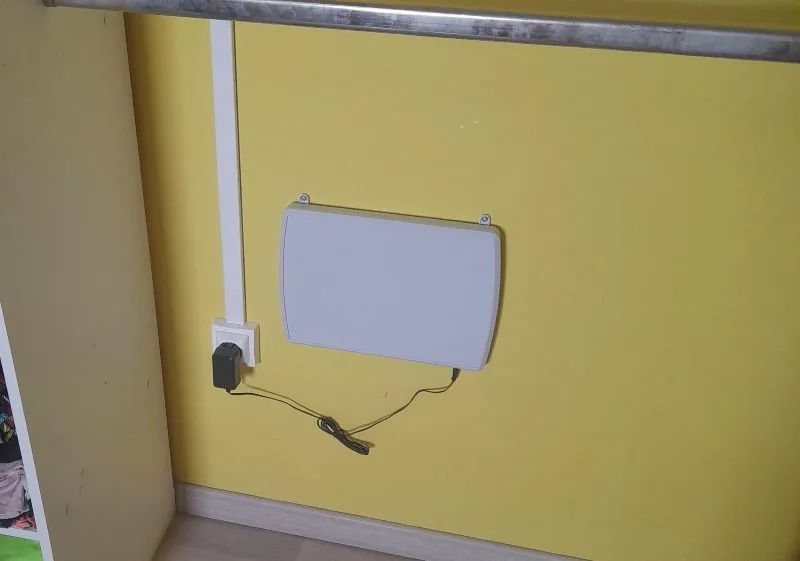
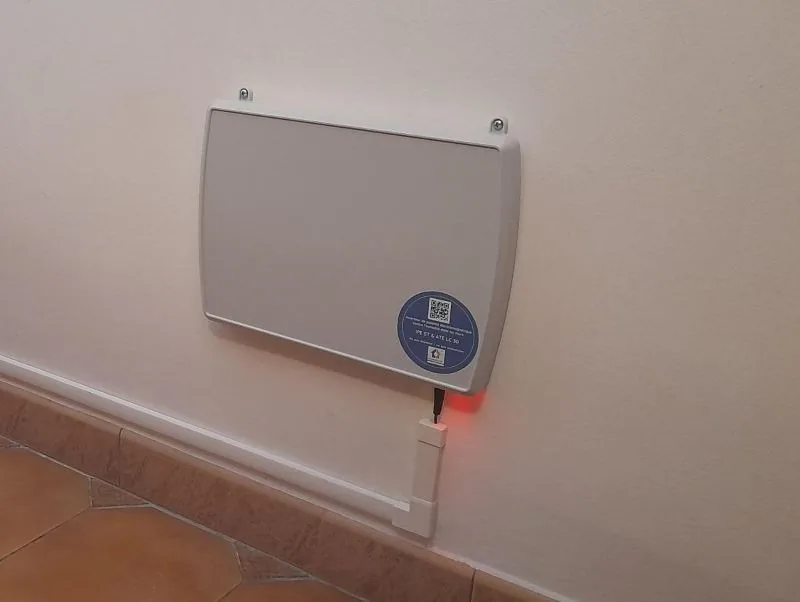
An ATE on a painted wall in Plaine-des-Cafres: a customer installation
November 18, 2026
The Lourenties Church report follows three walls between installation on 8 July 2014 and the control on 12 October 2015. It provides a documented reference for contractors, local authorities and building managers organising a similar follow-up.
Readings transcribed from the report
| Sampling point | Initial reading | Control reading |
|---|---|---|
| Rear wall | 7.8 gr/100 | 3.3 gr/100 |
| Right entrance wall | 8 gr/100 | 3.4 gr/100 |
| Left wall | 9.5 gr/100 | 2.5 gr/100 |
The values and units reproduce the report. Sample-mass headings and the stated units are not consistent, so no conversion to percentages or overall reduction is made. Samples are recorded at a depth of 20 cm, at a height of 48 cm for the rear wall and 40 cm for the other walls.
Church photograph: France64160, 27 February 2011, Wikimedia Commons, CC0. This view identifies the building; it does not show its condition after treatment.
What the report concludes
The report describes lower readings and drying in progress. It also notes lateral water entry, a damaged gutter and standing water that need to be addressed separately. These observations belong in the case presentation alongside the table.
Practical points for the professional proposal
Before suggesting equipment for another building, identify the moisture source and the separate repairs it requires. Use only an equipment reference confirmed for the original installation. A historical installation and a current product range must remain distinct.
Use the report as a documented reference
The file describes calcium-carbide testing of material samples. To compare visits, check the material, sampling point, height, depth, sample mass and units. An electronic moisture-meter index cannot be converted directly into grams of water. Keep the source entries and the conditions of each reading with the project record.
Prepare a proposal for the actual building
ATE devices are electromagnetic and require mains electricity. ATG devices use a geomagnetic approach and operate without an electrical supply. Consult the exact model’s specification and instructions, and assess its announced coverage with the floor plan and mounting position. Leaks, penetrating water and condensation need an appropriate response to their own cause.
Questions for contractors and building managers
Does this case guarantee the same result elsewhere?
No. It documents one building and its report. The diagnosis, materials, equipment and other water sources must be assessed for a new project.
When can the walls be refinished?
Base plastering or painting on the actual condition of the substrate, salts and suitable materials. An installation date or a photograph alone does not establish that a wall is ready.
Compare ATE and ATG devices for professionals · Discuss your project with Help Humidité Pro
Source: Humidistop site report supplied for this case study. The readings are transcribed and their comparison limits are explained above.