
Trade price damp treatment: how to unlock reseller pricing
July 2, 2026
Polarity Inverter Installation: The Complete Site Guide
September 8, 2026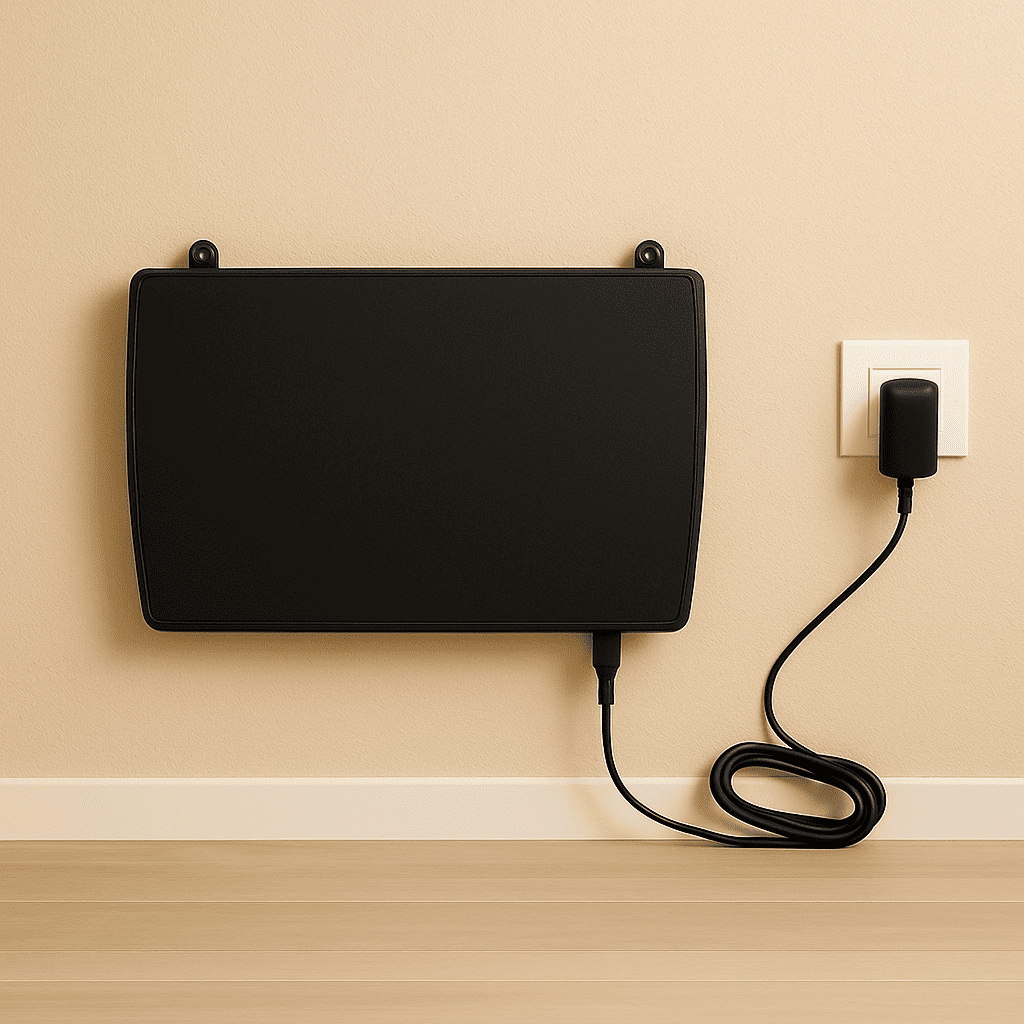
Finding a reliable rising damp device supplier takes time, and many building firms still buy through a wholesaler without realising it. Yet the chain can be shortened. Here is how buying direct from the manufacturer works, and what it changes on site.
A direct rising damp device supplier gives you trade pricing, quantity discounts and recommended retail prices with no middleman. Access requires a verified professional status, then an access code to the trade shop. No franchise agreement and no minimum term apply.
Why choose a rising damp device supplier directly
The margin stays with you
Every intermediary takes a share. So removing the wholesaler leaves you the gap between the trade price and the recommended retail price.
Technical guidance survives the journey
A wholesaler rarely passes on the full installation instructions. Yet those instructions decide the outcome on site, therefore your client’s satisfaction.
You know exactly what you fit
Help Humidité Pro manufactures in France, at Castres, with its partner SYSELEC. Some professionals have already sold these units without knowing it, through distribution channels.
After-sales stays light
A unit with no maintenance and no consumables generates no recurring returns. Moreover, you speak to the manufacturer directly if a question comes up.
Rising damp device supplier: opening a trade account
The application form
You submit a reseller account request stating your trade activity. This step takes a few minutes.
Verification of professional status
The shop serves professionals with a registered business only. Consequently, the team checks your status before activating the account.
Receiving your access code
Once the team approves your account, your code arrives by email. It opens the trade shop and displays the pricing reserved for you.
Your first order
You then order job by job, according to what your sites need. Payment goes through bank transfer or PayPal, and delivery follows within seven working days.
The reseller page sets out each of these steps.
What a rising damp device supplier provides beyond the hardware
A unit alone rarely convinces a homeowner. The supporting material counts as much as the product.
You receive teaching illustrations that explain polarity inversion in a single image. So the explanation fits into two minutes in front of a client.
You also get explanatory sheets to attach to your quotes. These spare you writing the technical argument yourself.
Ready-made texts for your own website come with the pack. As a result, you can present this solution even where damp treatment is not your core trade.
Finally, each product page shows a recommended retail price, which gives you a benchmark when pricing your work.
What the range treats, and what it does not
The exact scope
ATE and ATG units treat rising damp, meaning water climbing from the ground through the walls by capillary action. See the rising damp page.
What falls outside
They treat neither penetrating damp, nor flooding, nor surface mould. Stating that limit to your client protects your reputation.
Why this frankness helps you sell
A client who is promised the impossible comes back to complain. By contrast, a clearly stated scope prevents disputes and strengthens your credibility.
Choosing the right model for each job
A rising damp device supplier can advise, yet this choice decides the final outcome and your peace of mind afterwards.
Do not work from floor area. Measure the distance between the planned position and the furthest affected wall.
The ATE LC15 covers fifteen metres in diameter, so seven and a half metres of radius. It suits a compact dwelling.
The ATE LC30 covers thirty metres in diameter. It remains the most common choice for a detached house.
The ATE MAX reaches sixty metres in diameter and targets apartment blocks, older buildings and commercial premises.
Watch out for long narrow buildings. Indeed, the floor area looks modest, yet the distance between the two ends quickly exceeds a small model’s radius.
ATE or ATG: the rule to follow
The ATG range runs without electricity. However, the ATE always takes priority.
You fit an ATG only where fitting an ATE proves impossible, meaning where no permanently available earthed socket exists.
This rule avoids unpleasant surprises. So check for an earthed socket before you price the job.
Installation on site, in practice
A load-bearing wall, never a partition
The unit fixes to a damp load-bearing wall, since the phenomenon concerns elements that rest on the footings.
At floor level, at the centre of the area
A central position uses the full radius. By contrast, a unit tucked into a corner loses half its reach beyond the building.
In direct contact with the masonry
This point gets overlooked most often. Dry lining, a stud partition or internal insulation move the unit away from the structure and undermine the treatment.
On an earthed socket
Avoid sockets controlled by a switch. Indeed, a daily interruption cancels the effect of a constant field.
No drilling, no side works
Installation needs neither chasing nor making good. As a result, it fits at the end of a job with no disruption for the occupant.
What to tell the client about timing
This subject causes the most misunderstandings, so it deserves framing from the start.
When the installation guidance is followed, improvement generally shows between eighteen and twenty-four months. That timeline depends on the initial moisture level and on wall thickness.
Useful signs arrive earlier. The upper edge of the mark stops climbing, then settles, before it begins to fall.
Warn your client about one misleading effect. As water evaporates, it leaves its salts at the surface, so a wall that is improving may look temporarily whiter.
Rising damp device supplier: the arguments that reassure a client
A few objective points close the debate on reliability.
Help Humidité Pro manufactures in France, at Castres, with its partner SYSELEC, an electronics company certified to ISO 9001.
The Nexio and Emitech laboratories validate the EMC standards. See the French manufacturing page.
The units carry a ten-year manufacturer’s warranty, which matches a treatment that unfolds over a long period.
Finally, running cost stays marginal, around fifteen euros of electricity a year, with no servicing and no consumables.
Frequently asked questions
Do I need a registered business to order?
Yes. The shop serves professionals with a registered activity only, and the team verifies your status before activating the account.
Is there a minimum order or a commitment?
No franchise agreement and no minimum term apply. You order according to what your jobs require.
What delivery time should I plan for?
Allow seven working days for delivery. So build that into your site schedule.
Does fitting the unit require training?
No. Installation needs neither drilling nor building work, though it does require following the positioning instructions precisely.
How do I explain the principle to a sceptical client?
Use the teaching illustrations supplied. They show the action on water polarity without technical vocabulary.
In short
Choosing a direct rising damp device supplier removes the middleman, protects the installation guidance and gives you the material to convince your clients. Access requires a verified professional status, with no commitment.
Check for an earthed socket before pricing, measure the distance to cover rather than the floor area, and state the scope and the timeline up front. To open an account, go to the reseller page or browse the trade shop.


